

Commemorating America’s 250th Anniversary
Liberty and Legacy
Vermonters played a vital role in the American Revolution, advancing the ideals of a nascent nation into battle. In recognition of the signing of the Declaration of Independence, Vermont commemorates those contributions through events, reenactments, and historic programs statewide.
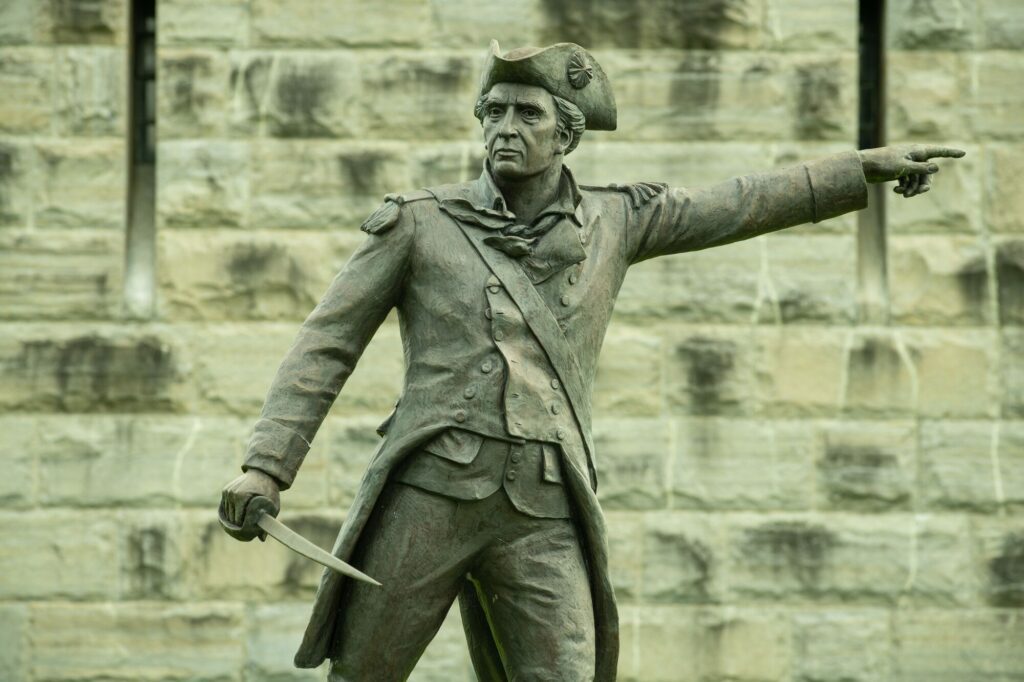
Many of Vermont’s historic sites and museums tell Revolutionary War stories, largely about the Green Mountain Boys. The militia secured key victories at Fort Ticonderoga and the Battle of Bennington that disrupted British strategy, provided crucial cannons for General Washington, and boosted Patriot morale, even as Vermont itself operated as an independent republic and supported the larger cause. Their independent spirit and militia actions significantly aided the American struggle for independence.
Vermont was not yet one of the thirteen colonies when the Declaration of Independence was signed in 1776; it was a disputed territory that declared itself an independent republic on July 8, 1777. Vermont finally became a republic the following year and joined the United States in 1791 as the 14th state.
Learn about the people, places, and turbulent events of the time at museums, town historical societies, and other cultural institutions. Check with individual sites for schedules.
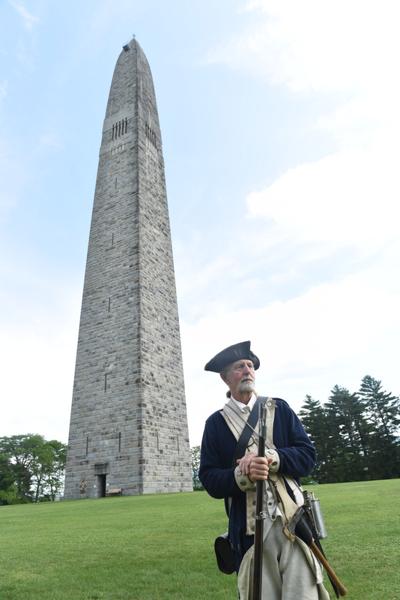
Bennington Battle Monument, Bennington
This 306-foot-tall limestone obelisk, the tallest man-made structure in Vermont, was completed in 1891 to commemorate the Battle of Bennington, a decisive American victory during the Saratoga campaign. On Aug. 16, 1777, Vermont’s Green Mountain Boys, the New Hampshire Militia, and volunteers from Massachusetts defeated British troops in New York who were charged with capturing provisions stored at the Bennington military supply depot, the site where the monument stands now. Nearby, the Bennington Museum has extensive collections related to the battle and construction of the monument.
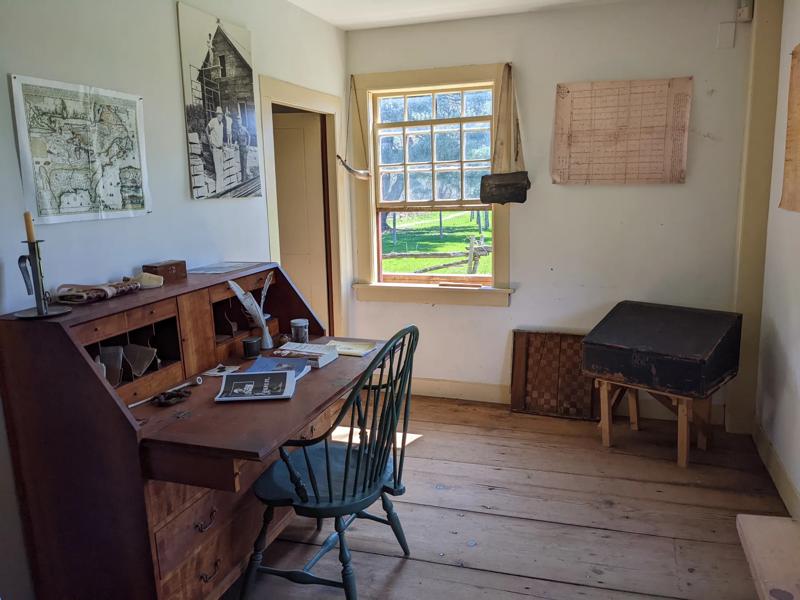
Ethan Allen Homestead Museum and Historic Site, Burlington
The Green Mountain Boys’ 1775 capture of Fort Ticonderoga, alongside Benedict Arnold and led by Ethan Allen and Seth Warner, is considered one of Vermont’s critical contributions to the Revolution. Allen’s 1785 home, located near downtown Burlington, is now a museum and cultural center with year-round events including Revolutionary War reenactments, Abenaki facilities, walking trails, and presentations by historians.
Ethan Allen Monument at Green Mount Cemetery, Burlington
The 1789 burial place of General Ethan Allen, a key Vermont founder and military leader, lies near the site of this monument, which was constructed in two phases around the time of the Civil War. In 1873, the 35-foot Doric column was topped by an eight-foot marble statue depicting a youthful Allen demanding the surrender of Fort Ticonderoga.
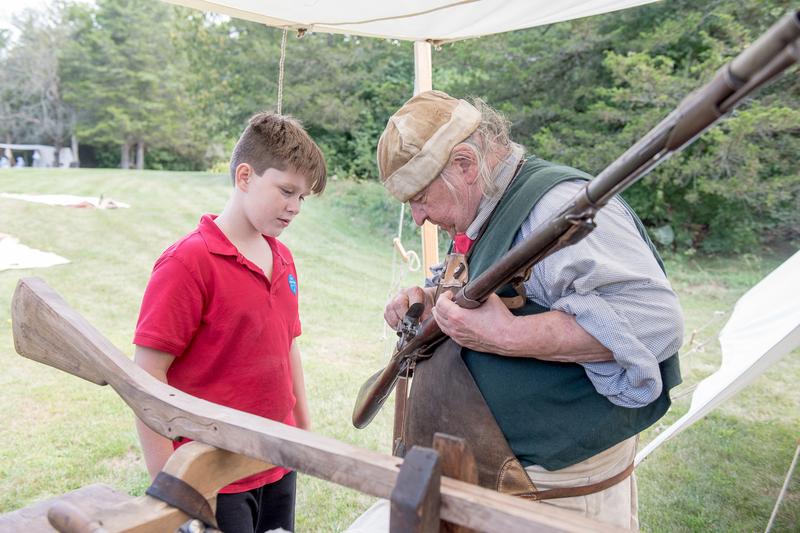
Mount Independence State Historic Site, Orwell
Once the site of a large wooden star fort and batteries, this rocky peninsula on Lake Champlain was critical to the defense of New York and New England, with soldiers stationed on site in late 1776. Today, Mount Independence offers an interactive museum and over six miles of trails along the archaeological remains of the Revolutionary War fortification.
Hubbardton Battlefield State Historic Site, Hubbardton
The only Revolutionary War battle fought on what would become Vermont soil took place here on July 7, 1777. It’s home to one of the oldest Revolutionary War battle monuments, erected in 1859. Now visitors can walk a trail around the battlefield, attend a reenactment, and visit a museum and shop.
Chimney Point State Historic Site, Addison
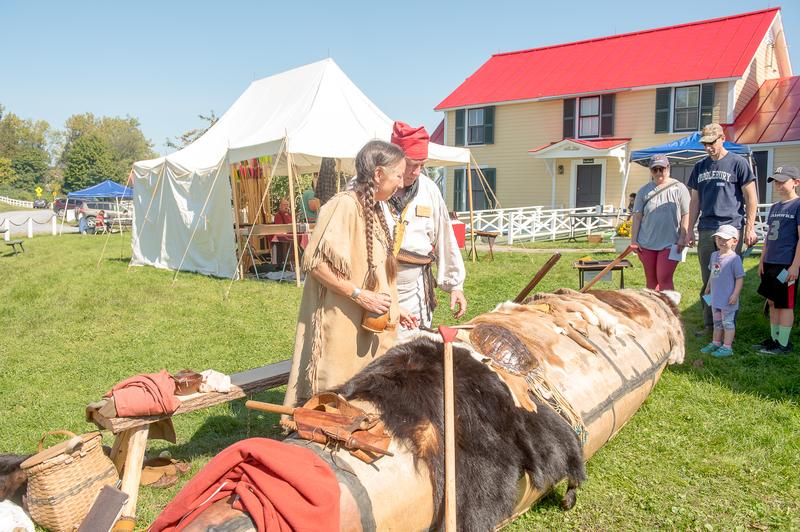
The scene of important Revolutionary War activity, this 1785 former tavern and post office on Lake Champlain is a museum that explores the history of Indigenous, French Colonial, and early American cultures. The grounds include a picnic area near the lake, a dock for lake access, and interpretive signs along a path across the Lake Champlain Bridge.
Bayley-Hazen Military Road, Northeast Kingdom
In 1779, Brigadier General Moses Hazen led an effort to build a military road from the Connecticut River town of Newbury, Vermont to the Canadian border as a strategic aid during the Revolutionary War. The road made it as far as Montgomery before Hazen stopped construction, worried that the British would
use the road to travel south into Vermont. In the years after the war, small villages grew up along it. Today, about three-quarters of the 57-mile route, much of it dirt road, is navigable; the rest is returning to forest.
Celebrate 250 in Vermont
The Vermont Events Calendar lists celebrations, reenactments and talks about Revolutionary times throughout the state. Browse the calendar by date, location, event type, and more.
See the Calendar about Celebrate 250 in VermontVERMONT PATRIOT
Midwife and farmer Ann Reynolds Story aided and advised the Green Mountain Boys as they fought for independence. A native of Connecticut, Story moved to Vermont’s Rutland area with her husband, Amos, and their five children in 1774. Her husband was killed by a falling tree and raiders destroyed the family home, but Story persevered, rebuilding a cottage as well as a tunnel and cave in the bank of the Otter Creek to use as a hiding place. Her cabin served as a message drop and as a shelter for the Patriots.
In 2019, the city of Rutland installed a seven-foot marble sculpture of Ann Story and her son, Solomon, who also worked to help the Green Mountain Boys. The work was designed by Amanda Sisk and carved by Evan Morse and Taylor Apostol. A Vermont Roadside Historic Site Marker commemorating the efforts of Ann Story during the Revolutionary War is being dedicated in 2026.