
Stargazing in Vermont
Vermont’s dark skies make a rich, velvety backdrop for the stars studding the cosmos.
“Some people, their jaw literally drops” when they see Vermont’s starscape, said Mark Breen, senior meteorologist and planetarium director at Fairbanks Museum and Planetarium in St. Johnsbury. “They’re in awe of what they can see that they didn’t even realize was there.” Other first-time Vermont stargazers find the enormity overwhelming because they don’t have anything to compare it to.
Only about 20% of Americans live somewhere they can see the Milky Way due to light pollution.
“It’s becoming really stark,” said Jon McCann, who leads Dark Sky Vermont, an organization of stargazers within the state, of the differences between rural and metropolitan night views. Urban light pollution means people see fewer stars in cities, and often just an orange glow or the moon. Some of the sky’s more subtle features, including the Milky Way, are only visible in darkness, when fainter stars become visible and fill the sky.
While Vermont is not an official dark sky destination, some state parks are working to pursue the designation, as is Dark Sky Vermont. The state is well positioned to be recognized for its dark skies because of its large swaths of rural area. Vermont’s legislature and involved community fosters intentional growth patterns around villages with an eye toward stewarding rural landscapes and wide open spaces. In Vermont, there’s also a general ethos of keeping lights off at night, which comes part and parcel with being among the safest states in the U.S.
It’s not hard to find nightlife in Vermont – just look up.
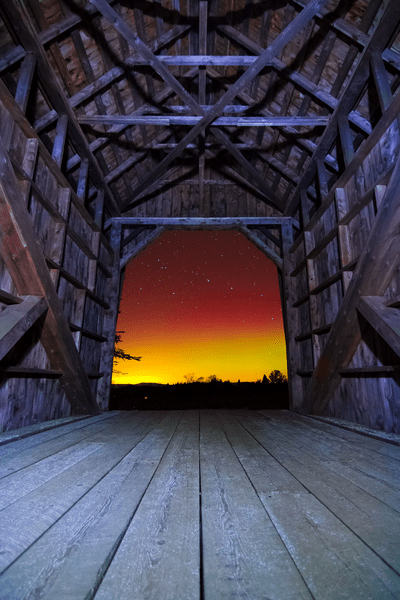
Vermont’s most recognizable constellations and celestial bodies shift with the seasons, so stargazers see different views in the winter than in the summer. In the winter, the constellation Orion, the Hunter, is easy to pick out by the three stars in a straight line that form his belt. Following the line of Orion’s belt to the left, viewers can pick out Sirius, the Dog Star, the brightest in the sky. Bright red star Betelgeuse and blue star Rigel form a shoulder and a foot, respectively.
Winter’s skies feel darker because the nights are longer and because there’s less humidity in the air to create a haze.
In the summer, there aren’t as many bright stars, but the Summer Triangle becomes visible early in the season, with the Milky Way running through it as a guide. Summer’s skies also bring meteor showers, such as the famous Perseid shower in August, though viewers have a chance to see a shooting star year-round – and odds go up the longer you stay outside. Another stargazing tip? Leave screens off so your eyes become accustomed to the dark.
The Fairbanks Museum & Planetarium hosts stargazing parties at different locations statewide.
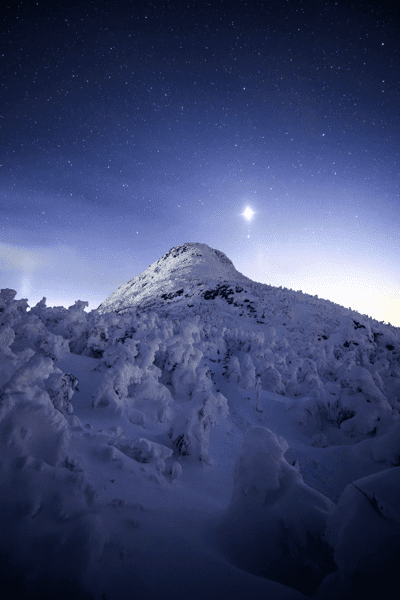
Vermont is well situated for viewing aurora borealis, the Northern Lights, and many people sojourn to Vermont in hopes of seeing and photographing them.
Another popular astrophotography theme is the Milky Way with a covered bridge or Vermont’s famous Whale Dance art in the foreground, located in Randolph.
The Fairbanks Museum & Planetarium hosts stargazing parties at different locations statewide.
For McCann, seeing the stars is a way to feel connected to other people.
“It’s really this unifying thing. It’s not political. There are very few things in the world we all share. We don’t share our local geography, but we pretty much all share the sky. It bridges all the divides. I very rarely meet someone who says they don’t feel something when they look up at the stars,” he said.


From Hildene to the Stars
The son of Pres. Abraham Lincoln and Mary Todd Lincoln, Robert Todd Lincoln was a dedicated amateur astronomer. In Manchester, his Vermont estate, Hildene, is home to the observatory and telescope he had built. While not currently operational, the observatory, finished in 1909, was state-of-the-art for its time and featured a 6” refractor. The public can walk inside the 20-foot-tall building and look around.
Ideas in your inbox
Vermont Travel Tips
Subscribe to the free Vermont Tourism email newsletter for news, events, and inspiration for your next trip to Vermont.