


Covered Bridges
Vermont Has Bridges Covered
100 Covered Bridges in Vermont
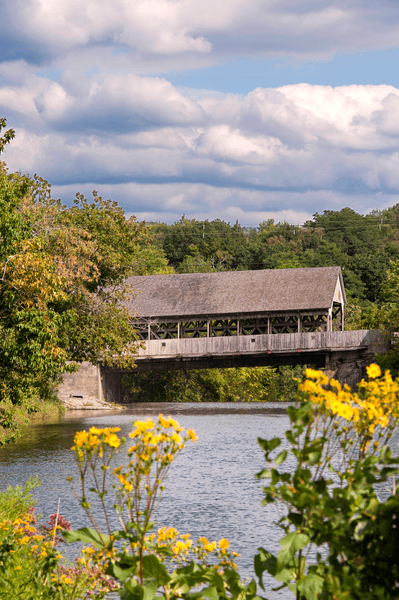
Covered bridges in Vermont date from 1820 when the original Pulp Mill Bridge across Otter Creek in Middlebury was built, with most constructed during the mid– to late 19th century. Covered bridges protected the span from the elements, helping them last longer. Longer bridges typically used the “town lattice truss” style, a series of crisscrossing wooden braces pegged together, while shorter spans made use of the Howe truss, involving vertical iron rods as well as wooden. Vermont was once home to more than 700 of these iconic structures. Many were destroyed in the Flood of 1927. Today, 100 remain, most still in active use on roadways spanning rivers and connecting routes. Vermont’s covered bridges are the settings for history, weddings, scenic drives and beautiful photography.
Vermont’s covered bridges used to be known as “kissing bridges” due to the moments of privacy they afforded courting couples riding through in a horse-drawn carriage.
Must-See Bridges
New England covered bridges make for a classic sight on a scenic drive. Vermont is home to 100 covered bridges, and most are owned by towns and continue to be part of road systems. As bridges are maintained, the Vermont Agency of Transportation oversees all work to ensure maintenance is in keeping with the bridges’ historic status.
West Arlington Covered Bridge
This 80-foot bridge, built in 1852, is just a few miles outside of downtown Arlington and, paired with an adjacent church, make for a quintessential New England scene.
Coburn Covered Bridge
This East Montpelier bridge has spanned the Winooski River since 1851 and is part of the National Registry of Historic Places.
Fisher Covered Bridge
Built in 1903, Wolcott’s Fisher Bridge was the last covered train bridge in operation in Vermont. Today, it’s part of the Lamoille Valley Rail Trail.
Cornish-Windsor Covered Bridge
The longest two-span covered bridge in the world connects Vermont to New Hampshire.
Pulp Mill Covered Bridge
This bridge is considered Vermont’s oldest covered bridge, spanning the Otter Creek in Middlebury in the Champlain Valley region.
Fuller Covered Bridge
One of five bridges in Montgomery and near another in Enosburgh, the Fuller Covered Bridge is an excellent example of a Town Lattice style bridge.
Taftsville Covered Bridge
This bright red covered bridge, built in 1836, welcomes visitors to the town of Woodstock, spanning the Ottauquechee River.
Vermont’s Covered Bridges
Throughout Vermont, from north to south, covered bridges connect communities and a rich history.
Explore the Open Road
Scenic Drives in Vermont
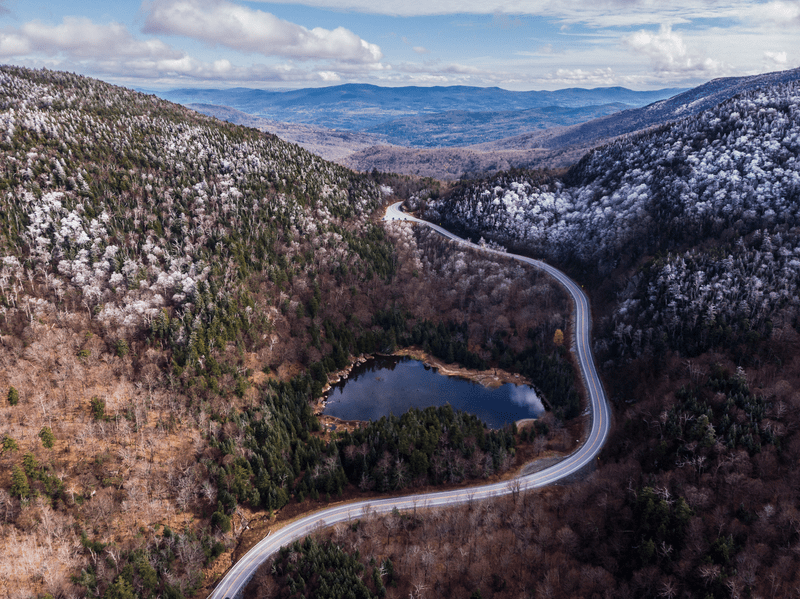
The best way to travel the state is by touring roads that meander through mountains and meet in valleys, including 10 federally designated scenic byways and a myriad of back roads, toll roads, and scenic routes. There are 100 covered bridges still in use today that add character to Vermont’s roads; photographing or driving through them is part of exploring the Green Mountain State. Covered bridges are easy to find; some are even visible from Interstate routes. Whether you use the map to plan a route with as many covered bridges as possible or enjoy the experience of driving through just one or two, no Vermont road trip is covered without a bridge.